
 +86-18343147735



0102030405
Top Water Reagent Test Kits for Home Use Reviewed
2026-04-27
You want the best protection for your family’s water. In 2026, leading Water Reagent test kit brands like Tap Score, Safe Home, VARIFY, Health Metric, JNW Direct, AquaChek, and HoneForest stand out for home use. Testing your water matters because the EPA now tracks microplastics and pharmaceuticals, and studies show millions of Americans face risks from arsenic and uranium in well water. When you choose a kit, check its accuracy, ease of use, price, and which contaminants it detects.
Key Takeaways
- Choose a water test kit based on your water source, whether it's city, well, or pool water.
- Look for kits that detect key contaminants like lead, bacteria, and nitrates for safety.
- Consider ease of use; many kits offer clear instructions and quick results for beginners.
- Select a kit that fits your budget; simple strips are affordable, while lab kits provide detailed analysis.
- Test your water at least once a year to ensure it remains safe and healthy for your family.
Top Water Reagent Test Kits Overview
Quick Comparison of Leading Kits
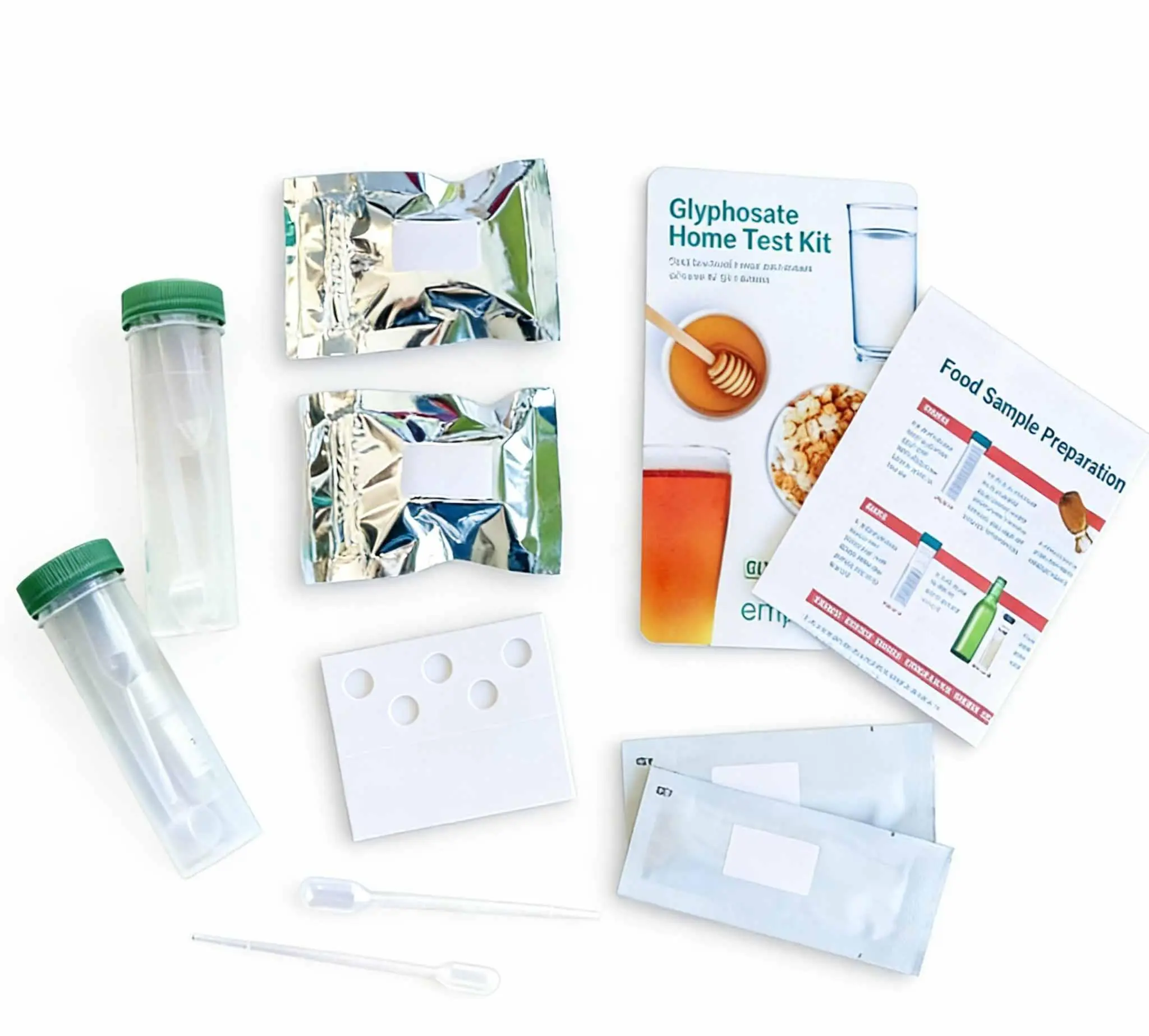
You want to know which Water Reagent Test Kit works best for your home. In 2026, top brands like AquaChek, HoneForest, JNW Direct, VARIFY, Health Metric, Tap Score, WaterCheck, Safe Home, and Varify Complete offer reliable options. Each kit helps you check for common problems like lead, bacteria, copper, iron, nitrate, nitrite, pH, hardness, and chlorine. You can choose between test strips for quick checks or vials for more detailed results. Most kits give you results in minutes and have clear instructions on the bottle.
Many kits test for over 200 water-quality parameters. Some, like Tap Score and Safe Home, use lab analysis for extra accuracy. Others, like JNW Direct and AquaChek, use strips for fast answers. You can use these kits for city water, well water, or even pool water. Most kits have a compact and durable design, so you can store them easily.
Tip: Look for kits with EPA or WRAS approval for extra peace of mind.
Summary Table of Features
| Test Kit Name | Parameters Tested | Contaminants Detected | Ease of Use | Price Range | Best For |
|---|---|---|---|---|---|
| Tap Score | 49-142 | Lead, bacteria, metals, more | Moderate | $$$ | City/Well |
| Safe Home ULTIMATE | 200+ | Lead, bacteria, metals, more | Easy | $$$$ | City/Well |
| VARIFY Premium | 15+ | Lead, pH, chlorine, more | Very Easy | $$ | City/Well |
| Health Metric | 14+ | Lead, copper, iron, more | Easy | $$ | Well |
| JNW Direct | 15 | Hardness, pH, chlorine | Very Easy | $ | City/Pool |
| AquaChek | 7+ | Salt, chlorine, pH | Very Easy | $ | Pool |
| HoneForest | 3+ | TDS, EC, temperature | Easy | $ | All sources |
| WaterCheck | 50+ | Metals, bacteria, more | Moderate | $$$ | City/Well |
| Varify Complete | 16+ | Lead, bacteria, metals, more | Easy | $$ | City/Well |
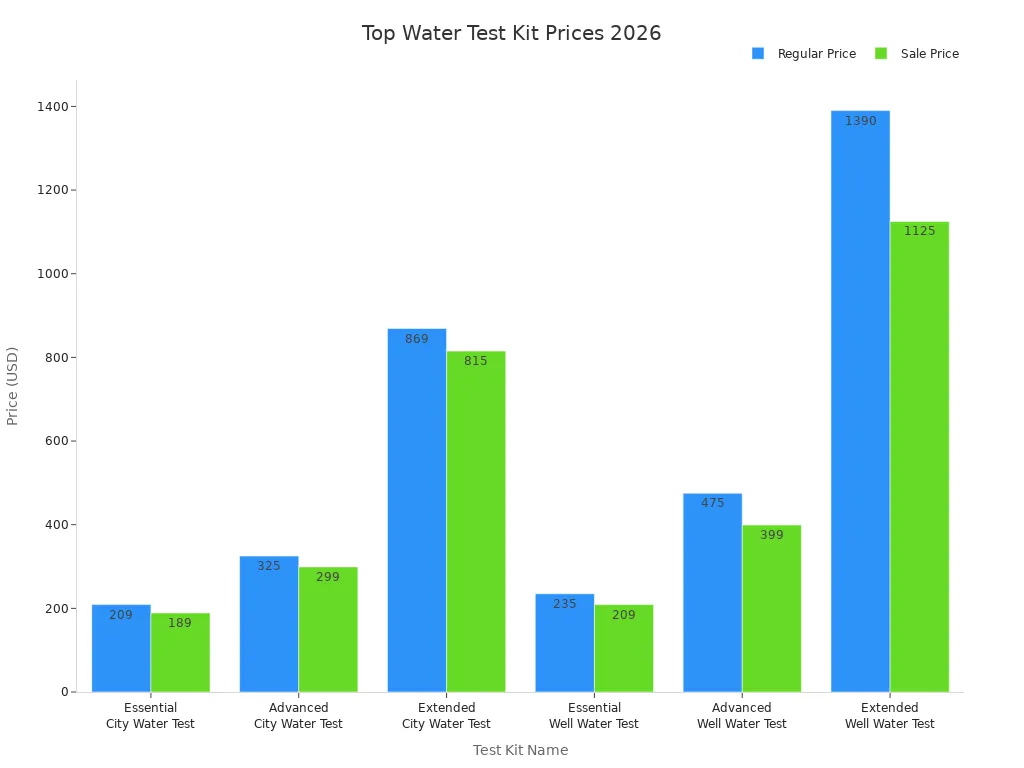
You can see that prices range from affordable strips to advanced lab kits. Most Water Reagent Test Kit options cover the most important contaminants. Choose the one that matches your water source and your budget.
Water Reagent Test Kit Reviews
Tap Score Home Water Test Kit
You want a thorough analysis of your water. The Tap Score Home Water Test Kit gives you detailed results and clear explanations for each contaminant. You receive information about health risks and ways to remove harmful substances like bromodichloromethane. The kit stands out for its expert customer support. You can ask questions and get answers from real experts. Many users like the easy-to-read reports. You may find the ordering process more complex than with simple test strips. The price is higher, but you get a complete picture of your water quality. This kit works best for city or well water when you need lab-level accuracy.
Tip: Choose Tap Score if you want expert guidance and detailed results for peace of mind.
Pros:
- Detailed contaminant explanations
- Expert customer support
- Lab-level accuracy
Cons:
- Higher price
- More complex ordering process
Best Use:
- Homeowners who want a full water analysis
- People with city or well water
Safe Home ULTIMATE Water Quality Kit
You want the most complete test available. The Safe Home ULTIMATE Water Quality Kit checks for over 200 parameters. You get a free bacteria test for coliforms like E. coli. The kit includes everything you need, such as water collection vessels and free return shipping. Experts rank this kit #1 for accuracy and reliability.
| Feature | Description |
|---|---|
| Comprehensive Testing | Tests for 200 different parameters |
| Free DIY Bacteria Test | Includes a free test for coliform bacteria (e.g., E. coli) |
| Recognized Accuracy | Ranked #1 for accuracy and reliability by Good Housekeeping |
| Additional Convenience | Includes collection vessels and free return shipping |
| Use Case | Source | Notes |
|---|---|---|
| Detailed analysis | Good Housekeeping | High accuracy, EPA approved |
| Well water testing | Family Handyman | Best kit for well water |
| Comprehensive testing | The Spruce | Lab and shipping costs included, no surprise fees |
You should pick this kit if you want the most thorough test for your home, especially for well water. The results are clear, and you do not pay extra fees.
VARIFY Premium Drinking Water Test Kit
You want a kit that covers many contaminants with lab-grade accuracy. The VARIFY Premium Drinking Water Test Kit detects:
- Fluoride
- Alkalinity
- Iron
- Copper
- Mercury
- Nitrite
- Nitrate
- Hardness
- Aluminum
- Lead
- Sulfate
- Bacteria (including E. coli)
- And more
You get reliable results at home. Some users say the results are harder to read than other brands. If you want a Water Reagent Test Kit that checks for many substances and you feel comfortable reading color charts, this kit is a strong choice.
Pros:
- Lab-grade accuracy
- Wide range of contaminants detected
Cons:
- Results can be harder to interpret
Best Use:
- Homeowners who want to check for metals, bacteria, and chemicals
- People who want a balance between price and thoroughness
Health Metric Well Water Test Kit
You need a kit made for well water. The Health Metric Well Water Test Kit checks for lead, copper, iron, and other common well water contaminants. You get easy-to-use strips and clear instructions. The kit gives you fast results, so you know right away if your water is safe. You can use this kit for routine checks or after heavy rain. It works best for private well owners who want to monitor their water regularly.
Pros:
- Designed for well water
- Simple instructions
- Fast results
Cons:
- Fewer parameters than lab kits
Best Use:
- Private well owners
- Routine well water checks
JNW Direct Total Water Hardness Test Strips
You want to check your water hardness quickly. The JNW Direct Total Water Hardness Test Strips are simple to use. You dip the strip and compare the color to the chart. You get results in seconds. These strips are good for routine monitoring, but they are not as precise as lab tests.
| Feature | Description |
|---|---|
| Ease of Use | Simple to use with quick results |
| Routine Monitoring | Good for regular checks of multiple parameters |
| Accuracy | Less precise than lab-based tests |
You should use these strips if you want to check for hardness in city or pool water. They are affordable and easy for anyone to use.
AquaChek Salt Water Pool Test Strips
You want to keep your pool safe and balanced. The AquaChek Salt Water Pool Test Strips measure sodium chloride levels from 400 to 7,000 ppm. You use a simple dip-and-read method. You do not need messy reagents. The AquaChek Connect app helps you track results and get treatment plans. You should test at least twice a week for the best chlorine production. These strips give you reliable results, similar to liquid tests.
| Benefit | Description |
|---|---|
| Precise Monitoring | Measures sodium chloride from 400 to 7,000 ppm |
| Ease of Use | Simple dip-and-read method |
| Mobile App Integration | AquaChek Connect app for tracking and advice |
| Regular Testing | Recommended at least twice a week |
| Reliable Accuracy | Results comparable to liquid tests |
| Convenience | Maintains safe pool water |
You should choose this kit if you own a saltwater pool and want easy, accurate testing.
HoneForest Water Quality Tester
You want a digital tool for quick checks. The Hone Forest Water Quality Tester measures total dissolved solids (TDS), conductivity, and temperature. You can use it for any water source, including tap, well, or bottled water. The tester has a range of 0-9990 ppm. It is user-friendly and reliable for both home and professional use.
- Measures TDS, conductivity, and temperature
- Wide measurement range for different water types
- Simple operation
You should use this tester if you want fast digital readings and need to monitor water quality often.
You can find a Water Reagent Test Kit for every need, from simple strips to advanced lab kits. Choose the one that fits your water source and your comfort level with testing.
Comparing Top Kits
Accuracy and Reliability
You want to trust your results. Independent lab tests show that most at-home kits give you immediate readings and high repeatability when you calibrate them. However, these kits do not always identify every contaminant unless designed for that purpose. At-home kits offer convenience, but professional lab tests provide more detail and can find even tiny amounts of chemicals. The EPA recommends certified drinking water laboratories for the most accurate results. You can see the main differences in this table:
| Testing Method | Strengths | Weaknesses |
|---|---|---|
| At-home testing kits | Convenient, immediate results | Less specific, sensitive reagents, human error |
| Professional lab tests | Comprehensive, rigorous inspections | More time, higher cost |
Ease of Use
You want a kit that is simple to use. Many users say that leading kits have clear, concise instructions. You can follow the steps even if you have never tested water before. Some kits include video guides to help you. Most kits have a user-friendly design, so you do not need special skills.
- Clear instructions make testing easy for beginners.
- Video guides help you understand each step.
- User-friendly design means less confusion.
Contaminants Detected
You need to know what your kit can find. Some kits, like Safe Home ULTIMATE and Tap Score, test for over 100 contaminants. Others, like JNW Direct and AquaChek, focus on a few key parameters such as hardness or salt. You should check the list of contaminants before you buy. If you use well water, you may want a kit that checks for metals and bacteria. For pool water, you may only need to test for salt and chlorine.
Value for Money
You want the best results for your budget. Simple strip kits cost less and give you fast answers. Lab-based kits cost more but provide detailed reports. If you need a quick check, a strip kit works well. If you want a full analysis, a lab kit is worth the price. You should match the kit to your water source and your needs.
Tip: Choose a Water Reagent Test Kit that fits your water source, the contaminants you care about, and your budget.
Choosing the Right Water Reagent Test Kit
Matching Kit to Water Source
You need to match your test kit to your water source for the best results. Each type of water—well, city, or pool—has different needs. Here are some things to consider:
- Check which elements the kit can detect, like calcium hardness, alkalinity, or cyanuric acid.
- Look at your pool type. Saltwater, chlorine, and bromine pools need different kits.
- Think about how often you will test. Basic kits work for weekly checks. Advanced kits help with monthly or detailed testing.
- Saltwater pools need kits that measure pH, alkalinity, and chlorine well.
- For more complete testing, you may want to visit a local pool store for extra help.
- Tip: The right kit gives you accurate results and helps you keep your water safe.
Common Contaminants to Test For
You should know which contaminants matter most for your water. Health experts say these are important:
- Microorganisms: Coliform bacteria, E. coli, Giardia, Cryptosporidium
- Heavy metals: Lead, arsenic, copper, cadmium, chromium, selenium
- Nitrates and nitrites: These are dangerous for babies
- Organic chemicals: Pesticides, solvents, VOCs
- Inorganic chemicals: Chlorine, fluoride, iron, manganese, sulfate
- Physical attributes: pH, hardness, total dissolved solids (TDS), turbidity
For city water, focus on lead, PFAS, and disinfection byproducts. For well water, test for coliform bacteria, nitrates, arsenic, iron, and radon.
When to Use a Reagent Kit vs. Other Methods
You may wonder when to use a Water Reagent Test Kit instead of digital or lab testing. This table can help you decide:
| Aspect | Reagent Test Kits | Digital/Laboratory Testing |
|---|---|---|
| Ease of Use | Simple to operate, less user error | More complex, higher chance of mistakes |
| Speed of Results | Quick on-site testing | May take longer for results |
| Accuracy | Good for most home needs | Best for detailed or official analysis |
| Ideal Use Case | When you need fast answers at home | When you need a full, detailed report |
You should use a reagent kit for quick checks and regular monitoring. Choose lab testing if you need a full report or have a serious concern.
You have many reliable water reagent test kits to choose from. The best kits offer clear instructions, accurate results, and compatibility with your water source.
| Key Factors | What to Look For |
|---|---|
| Parameters | Salt, pH, chlorine, cyanuric acid |
| Ease of Use | Simple steps, quick results |
| Accuracy | Consistent readings, quality strips or meters |
| Compatibility | Works with your pool or home water system |
Before you buy, know your water source and follow directions closely. Test your water at least once a year for safety and peace of mind.
FAQ
How often should you test your home water?
You should test your water at least once a year. If you notice changes in taste, smell, or color, test more often. After heavy rain or plumbing repairs, check your water for safety.
Can you use a Water Reagent Test Kit for pool water?
Yes, you can use a Water Reagent Test Kit for pool water. Choose a kit that measures chlorine, pH, and salt levels. Pool kits help you keep your water balanced and safe for swimming.
What contaminants can you detect with most kits?
Most kits detect lead, bacteria, chlorine, iron, and nitrates. Some advanced kits check for over 100 contaminants, including heavy metals and pesticides. Always read the kit label to see what it tests.
Are test strips or lab kits better for accuracy?
Lab kits give you more accurate results. Test strips work well for quick checks and routine monitoring. If you need detailed information, choose a lab kit.
Do you need special skills to use these kits?
You do not need special skills. Most kits have clear instructions. You can follow simple steps and get results in minutes. Video guides help you if you need extra support.