Top 10 Things You Should Know About Hemoglobin Blood Test Results
Understanding your Hemoglobin Blood Test results is crucial. Dr. Emily Chen, a renowned hematologist, emphasizes, “These results reveal much about your overall health.” Hemoglobin, a protein in red blood cells, carries oxygen throughout the body. Abnormal levels can indicate various health issues, from anemia to lung disease.
Many people overlook the significance of their hemoglobin levels. A normal level suggests that your body efficiently transports oxygen. However, low levels can signal underlying health problems that deserve attention. It’s essential to engage with your healthcare provider to understand these results fully. Effective interpretation of the Hemoglobin Blood Test can guide you in making necessary lifestyle changes.
Some may find the test results puzzling, especially if they fall outside normal ranges. It’s important to ask questions and seek clarification. Knowing your hemoglobin level can empower you. This information helps to reflect on your lifestyle choices and overall health condition. In the end, a better understanding can promote proactive health management.

Understanding Hemoglobin: What It Is and Its Role in the Body
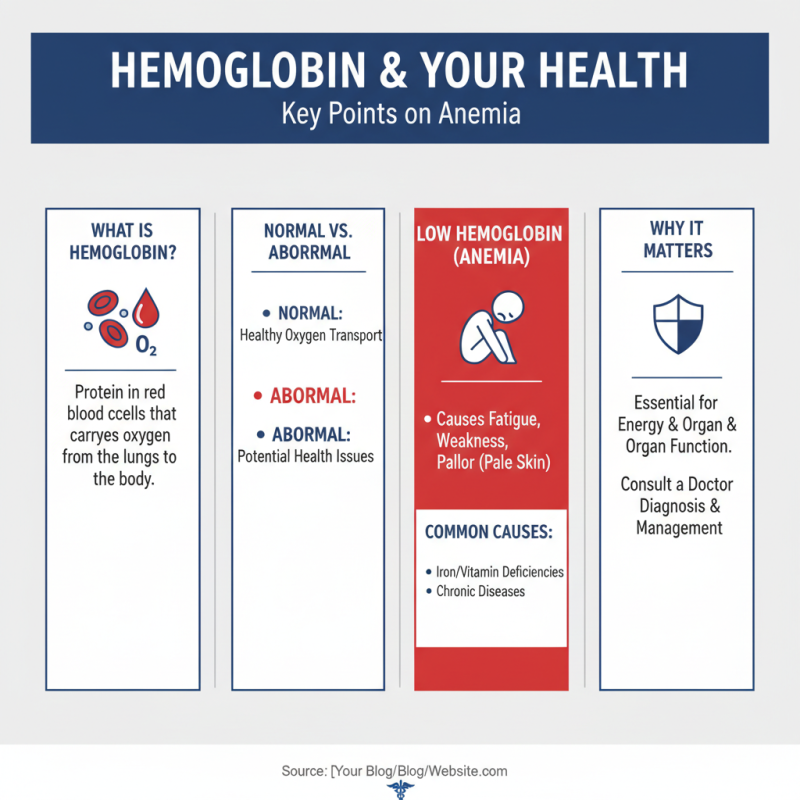
Hemoglobin is a vital protein found in red blood cells. It plays a crucial role in transporting oxygen from the lungs to the body's tissues. This process is essential for cellular function. Without adequate hemoglobin, our bodies cannot perform at their best. Low levels can lead to fatigue and weakness.
Understanding hemoglobin levels can reveal much about a person's health. A simple blood test can measure hemoglobin concentration. Normal levels vary by age and sex. For instance, men typically have higher levels than women. It’s important to note that various factors can influence these results. Dehydration, for example, can falsely elevate hemoglobin readings.
Awareness of your hemoglobin levels prompts reflection on overall wellness. High levels may suggest dehydration or respiratory issues. Low levels could indicate anemia or nutritional deficiencies. Regular monitoring can lead to better health decisions. Being proactive can help avoid potential health complications. Keeping track of these levels is not just a routine; it's a pathway to understanding one’s health deeply.
Types of Hemoglobin Tests: Differences and Purposes
Hemoglobin tests assess how well hemoglobin in your blood binds oxygen. Common tests include the complete blood count (CBC) and hemoglobin A1C tests. Each type has its unique purpose and indicators. The CDC notes that the CBC can reveal anemia and other health issues. It measures red blood cells, hemoglobin levels, and more.
Hemoglobin A1C is crucial for diabetes management. It reflects the average blood glucose levels over the past three months. According to the American Diabetes Association, a result over 6.5% indicates diabetes. Some people may misunderstand their results, believing a good A1C guarantees good health. This misconception can lead to complacency.
Sickle cell tests identify sickle cell disease by analyzing hemoglobin variants. The National Heart, Lung, and Blood Institute indicates that this can affect blood flow and oxygen delivery. Misinterpreting these results can lead to serious health consequences. Knowing the right test is essential for accurate diagnosis and treatment. Talk to your healthcare provider for clarity on your hemoglobin test results.
Interpreting Blood Test Results: Normal Ranges and Their Significance
Understanding hemoglobin blood test results is crucial for assessing your health. Hemoglobin is a protein in red blood cells that carries oxygen. Normal levels vary by age and gender. For adults, normal ranges generally fall between 13.5 to 17.5 grams per deciliter for men and 12.0 to 15.5 grams per deciliter for women. Variances outside this range can indicate health issues. A low hemoglobin level might suggest anemia, while a high level could point to dehydration or other conditions.
Interpreting these results requires careful consideration. Numbers alone can be misleading. It's important to evaluate them in context. Many people overlook symptoms. Fatigue, weakness, and pale skin might indicate low levels. A single test doesn't provide a complete picture. Repeated tests might be necessary.
Lifestyle factors such as diet and hydration can impact results too. If your levels are abnormal, consider consulting with a healthcare provider for further evaluation. They might suggest dietary changes or additional tests, leading to better health decisions.
Factors Affecting Hemoglobin Levels: Causes of Variation in Results
Hemoglobin levels can fluctuate for various reasons. Factors like hydration status directly impact blood concentration. Dehydration can artificially raise hemoglobin readings. Conversely, excess fluid intake may dilute hemoglobin levels. This delicate balance makes understanding results essential.
Nutritional deficiencies play a crucial role. A lack of iron is the most common cause of low hemoglobin. According to the World Health Organization, nearly 1.62 billion people globally suffer from anemia due to iron deficiency. Vitamin B12 and folate deficiencies also contribute to low hemoglobin levels. However, testing for these deficiencies is often overlooked.
Chronic conditions can affect hemoglobin too. Kidney disease can lead to decreased erythropoietin production. This hormone is essential for red blood cell production. Thomas et al. (2020) found that patients with chronic illness frequently show altered hemoglobin levels. Stress and altitude adaptation can cause variations as well. Regular monitoring is important to identify these variations and address underlying causes.

 +86-18343147735
 Email
Email WhatsApp