Inquiry
Form loading...

What Are China Top FBS Blood Test Kit Manufacturers?

China’s Fbs Blood Test market is becoming more important as diabetes screening expands across hospitals, clinics, pharmacies, and homes. According to the International Diabetes Federation’s Diabetes Atlas, 537 million adults lived with diabetes worldwide in 2021. China accounted for about 140.9 million adults. These figures create strong demand for reliable blood glucose meters, test strips, lancets, and integrated monitoring systems.

The American Diabetes Association’s Standards of Care in Diabetes—2024 identifies fasting plasma glucose as an established method for diagnosing diabetes. It also emphasizes proper testing procedures and laboratory quality. This distinction matters. A home Fbs Blood Test kit supports monitoring, but it does not replace professional diagnosis. Small differences in sampling, storage, calibration, or user technique can change results.

Dr. Robert A. Gabbay, Chief Scientific and Medical Officer of the American Diabetes Association, has described diabetes as “one of the biggest health challenges of our time.” His statement gives this product category a wider public-health context. Manufacturers such as Sinocare, Yuwell, Mindray, and other Chinese suppliers compete through accuracy, affordability, connectivity, and production scale. However, a familiar brand is not automatically the best choice.

This overview examines China’s top FBS blood test kit manufacturers through practical criteria. These include regulatory registration, ISO 15197 performance, clinical evidence, strip stability, after-sales support, and export experience. Product claims still require careful verification. Some market information changes quickly, and public data can be incomplete. That is an uncomfortable limitation, but responsible purchasing should acknowledge it.
What Are China Top FBS Blood Test Kit Manufacturers?

What Are FBS Blood Test Kits and How Do They Work?

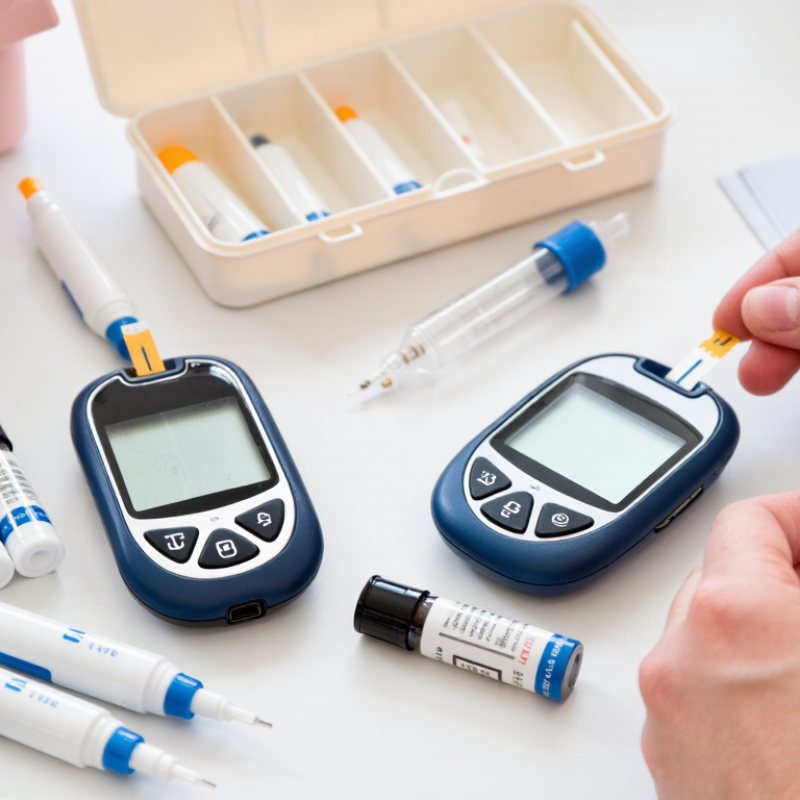
FBS blood test kits measure fasting blood sugar, usually after 8–12 hours without food. The kit commonly includes a glucose meter, disposable lancets, test strips, and a control solution. A clean finger prick provides a small blood sample. The strip draws in the blood and reacts with glucose through an enzyme-based sensor. The meter then converts the electrical signal into a reading, often within seconds.

Accuracy depends on more than the meter. Strip storage matters. Heat, humidity, and expired strips can affect results. Users should wash and dry their hands before testing, because fruit residue may distort the reading. A fasting result should be recorded with the date, time, and any unusual symptoms. One reading is only a snapshot. It should not replace professional assessment.

When comparing leading FBS kit manufacturers, buyers should examine clinical performance data, quality-system certification, batch traceability, and clear instructions. Independent validation is more convincing than promotional language. Reliable manufacturers also provide control testing guidance and responsive technical support. Packaging should show intact seals and readable expiry information. Small details matter.

The process is simple, but not perfect. Incorrect handwashing or excessive squeezing can change the sample. Results that seem unexpected should be repeated according to the instructions and discussed with a qualified healthcare professional. Manufacturers that openly explain limitations often demonstrate stronger technical credibility than those promising effortless certainty.
Which Features Define Leading Chinese FBS Test Kit Manufacturers?

Leading Chinese FBS blood test kit manufacturers are defined by measurable quality, not export volume alone. The IDF Diabetes Atlas reports 537 million adults lived with diabetes in 2021, with 643 million expected by 2030. This growing demand increases pressure on fasting blood glucose testing. Reliable manufacturers should maintain ISO 13485 quality systems and validate meters against ISO 15197 performance requirements. Their production records should connect each strip lot to raw materials, calibration data, and release testing.

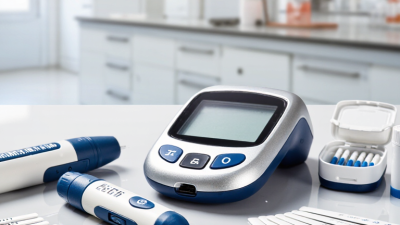
Practical design matters too. A dependable kit should use a small capillary sample, provide a clear result within seconds, and reduce errors from temperature or humidity. Strip packaging needs strong moisture protection. This detail is easy to underestimate. WHO’s 2024 global diabetes report emphasizes better diagnosis and access to care, especially in lower-resource settings. Therefore, manufacturers should provide stable storage conditions, multilingual instructions, external quality-control materials, and responsive technical support. Independent evaluations are more convincing than internal claims.

Chinese suppliers with strong engineering teams often improve enzyme stability, coding accuracy, and battery performance through repeated lot testing. Yet no factory is flawless. Occasional strip variation, unclear instructions, or delayed complaint handling can still appear. Buyers should request clinical evaluation reports, stability data, sample-to-sample precision results, and post-market surveillance records. The strongest manufacturers accept this scrutiny and disclose limitations instead of presenting perfect numbers.

What Are China Top FBS Blood Test Kit Manufacturers? - Which Features Define Leading Chinese FBS Test Kit Manufacturers?

The following matrix summarizes the main product, regulatory, quality, and supply-chain features that should be used when evaluating leading Chinese fasting blood sugar test kit manufacturers. The figures shown are common industry benchmarks or regulatory requirements and must be confirmed in the relevant product documentation.

Evaluation Dimension Reliable Manufacturer Benchmark Why It Defines a Leading Supplier Recommended Verification Evidence
Regulatory Registration Required
Valid registration or filing for the intended Chinese market and product classification.
Confirms that the product has passed the applicable regulatory review for its intended use. Check the registration or filing number, product name, intended use, model, certificate validity, and regulatory database record.
Quality Management System Expected
ISO 13485-certified medical-device quality management system.
Demonstrates controlled design, manufacturing, traceability, complaint handling, and corrective-action processes. Request a current ISO 13485 certificate issued by an accredited certification body and confirm the certificate scope.
Intended Use Clearly defined for fasting blood glucose measurement in capillary whole blood, venous whole blood, or another specified specimen type. Clear intended-use language reduces clinical, labeling, and market-access risks. Review the instructions for use, product label, target user, testing environment, and stated clinical application.
Testing Method Electrochemical biosensor technology is widely used for portable blood glucose meters and compatible test strips. Electrochemical systems can support rapid point-of-care testing when properly calibrated and validated. Confirm the enzyme or sensing chemistry, calibration method, meter-strip compatibility, and validation report.
Sample Volume Typically a small capillary whole-blood sample; many portable systems require approximately 0.5–1.0 µL, depending on design. Lower sample volume can improve user comfort and simplify home or point-of-care testing. Verify the exact sample volume in the instructions for use and confirm performance at the minimum required volume.
Result Time Commonly approximately 5–10 seconds after adequate sample application for portable systems. Short turnaround time is important for self-testing, pharmacies, clinics, and emergency screening workflows. Review timed performance data, sample-application instructions, and any conditions that may extend the reporting time.
Measuring Range Many blood glucose systems declare a range around 20–600 mg/dL, equivalent to approximately 1.1–33.3 mmol/L; the exact range varies by product. A suitable range helps reduce reporting limitations at low and high glucose concentrations. Check the approved measuring range, low/high warnings, and whether out-of-range results are displayed as codes or numerical values.
Accuracy Performance Performance should comply with the accuracy requirements applicable to the target market and product category, such as ISO 15197 for self-monitoring blood glucose systems where applicable. Verified accuracy is more important than a low purchase price because inaccurate results may affect treatment decisions. Request the latest accuracy study, comparison method, sample size, glucose concentration distribution, and applicable standard version.
Hematocrit and Interference Control Test-strip performance should be evaluated across the stated hematocrit range and against relevant interfering substances. Hematocrit variation and substances such as maltose, galactose, uric acid, or acetaminophen may affect some glucose technologies. Review interference and hematocrit studies, stated limitations, and warnings in the instructions for use.
Environmental Operating Conditions Operating temperature, humidity, altitude, and storage conditions should be clearly specified for the meter and test strips. Stable performance under defined conditions is essential for export markets and decentralized testing. Check environmental validation data and confirm that the stated conditions match the target country and distribution channel.
Test-Strip Shelf Life Commercial systems commonly provide a defined shelf life, often approximately 18–24 months when unopened; opened-vial stability varies. Longer validated shelf life can reduce inventory loss and simplify international distribution. Verify real-time or accelerated stability data, expiration rules, opened-vial stability, and lot-specific labeling.
Lot-to-Lot Consistency Documented incoming-material controls, calibration procedures, release testing, and lot traceability. Consistent results across production lots are critical for recurring orders and multi-site use. Request batch-release specifications, certificate-of-analysis examples, retained-sample procedures, and traceability records.
Quality Control Materials Availability of compatible glucose control solutions and documented control-testing procedures. Control materials help users verify meter and strip performance before patient or self-testing. Confirm control levels, expected ranges, storage conditions, expiration period, and control-test instructions.
Packaging and Labeling Moisture-resistant strip packaging, clear expiration labeling, lot identification, and multilingual documentation. Good packaging protects strip chemistry and supports regulatory compliance in different markets. Inspect packaging specifications, transport testing, label artwork, barcode format, language support, and tamper-evidence features.
OEM and Private-Label Capability Documented support for customized packaging, labeling, manuals, software settings, and market-specific compliance files. Strong customization capability enables distributors and healthcare organizations to build compliant product lines. Review customization boundaries, change-control procedures, artwork approval workflow, minimum order quantity, and sample-production process.
Production Capacity Dedicated clean production areas, automated or semi-automated assembly, and controlled capacity planning. Reliable capacity reduces lead-time fluctuations and improves continuity for recurring procurement programs. Evaluate production-line information, monthly capacity, equipment list, staffing, capacity-utilization data, and contingency planning.
After-Sales and Technical Support Documented complaint handling, technical response procedures, training materials, and replacement policies. Responsive support is essential when meters, strips, software, or user procedures generate field issues. Check service-level agreements, response times, troubleshooting guides, field-correction procedures, and escalation contacts.
Export Documentation Ability to provide commercial invoices, packing lists, certificates of origin, free-sale documentation where applicable, and technical files required by the destination market. Complete documentation reduces customs delays and supports distributor registration and market entry. Request a sample document package and verify responsibility for translation, legalization, registration support, and shipment compliance.
Supplier Selection Priority Highest priority should be given to verified clinical performance, regulatory compliance, lot consistency, supply continuity, and transparent documentation. A balanced evaluation is more dependable than selecting a supplier solely on unit price or production volume. Use a weighted audit scorecard and require objective evidence before approving samples, pilot orders, or long-term supply agreements.

Note: FBS is commonly used to mean fasting blood sugar or fasting blood glucose. Product ranges, accuracy claims, regulatory status, and shelf-life specifications differ by model and destination market; buyers should confirm all claims against current certificates, technical files, validation reports, and instructions for use.

Who Are China’s Top FBS Blood Test Kit Manufacturers?

China’s top FBS blood test kit manufacturers are usually established in-vitro diagnostic producers, not simple trading companies. They manufacture glucose test strips, blood collection components, calibration materials, and compatible meters. The most credible suppliers operate audited facilities and maintain ISO 13485 quality systems. They also provide batch records, stability data, and traceability documents.

A reliable Chinese manufacturer should show real production experience with fasting blood sugar testing. Look for automated strip coating, controlled reagent storage, and documented laboratory testing. Strong suppliers can explain sample volume, reading time, temperature limits, and error codes clearly. They should also support OEM or private-label projects without hiding the original production details. That matters.

Purchasers should verify product registration in the target market before placing a large order. Independent performance testing is also useful, especially for accuracy near medical decision limits. Some suppliers present impressive certificates but provide weak clinical evidence. That deserves careful questioning. I would compare several factories, inspect sample packaging, and review at least three recent production batches. Manufacturing capacity alone does not prove dependable results. A lower-cost kit may still create higher expenses through recalls, poor strip stability, or customer complaints. The best choice depends on verified performance, transparent documentation, responsive technical support, and consistent quality—not merely factory size.

How Are Chinese FBS Test Kits Manufactured and Quality-Controlled?

China’s leading FBS blood test kit manufacturers usually begin with controlled sourcing. They inspect glucose-reactive chemicals, membranes, electrodes, plastics, and packaging materials. Each incoming batch receives an identification code. This supports traceability from raw material to finished kit.

During production, automated lines assemble test strips in low-humidity rooms. Humidity matters because moisture can weaken enzyme performance. Technicians apply precise reagent volumes, then seal strips inside foil pouches with desiccants. Meters and lancets are produced under separate controls. Workers check dimensions, electrical signals, display readings, and blood-volume requirements. Small errors can affect patient results.

Quality teams test samples from every production lot. They compare readings with laboratory reference methods across low, normal, and high glucose levels. They also examine repeatability, shelf life, temperature resistance, and interference from substances such as vitamin C or hematocrit variation. Calibration codes must match the strip lot. Packaging inspections include seal strength, labels, instructions, and expiry dates.

The strongest facilities maintain ISO 13485-based quality systems and document corrective actions. They also retain samples for later investigation. Still, no factory is perfect. A damaged pouch, incorrect storage, or an unwashed finger can distort results. Manufacturers should state these limits clearly, although some instructions remain too technical for ordinary users. Independent testing and transparent performance data deserve closer attention.

What Are China’s Top FBS Blood Test Kit Manufacturers?

How Are Chinese FBS Test Kits Manufactured and Quality-Controlled?

This chart summarizes commonly used reference parameters for fecal blood screening, also known as FOB or FBS lateral-flow test kits. Typical production control includes membrane and reagent inspection, controlled assembly, internal control-line verification, stability testing, and final-batch release testing. Exact sample volume, reading time, and detection cutoff depend on the approved product instructions for use and applicable regulatory requirements.

Reference values shown: approximately 50 ng/mL hemoglobin detection cutoff, approximately 3 drops of sample, and approximately 5 minutes reading time. These are common reference specifications rather than claims for any individual manufacturer or brand.

How Should Buyers Compare Chinese FBS Blood Test Kit Suppliers?

Buyers comparing Chinese fasting blood sugar (FBS) test kit suppliers should look beyond price. The 2021 IDF Diabetes Atlas estimated that 537 million adults worldwide had diabetes. This demand increases pressure on suppliers to deliver consistent, easy-to-use testing products. A serious evaluation should examine ISO 13485 certification, manufacturing controls, product registration, and batch traceability. Certificates alone are not enough.

Ask for independent performance data, not only promotional claims. Compare sensitivity, specificity, measurement range, repeatability, and hematocrit tolerance. Review data from at least three production lots. Check whether the results were tested against a laboratory reference method. The WHO’s 2023 report on diabetes care emphasizes reliable diagnosis and access to quality monitoring. Therefore, suppliers should provide validation protocols, control-solution results, and stability data for the full shelf life.

Details matter. Inspect strip packaging, desiccant protection, coding systems, and storage temperatures. A damaged moisture seal can quietly affect readings. Request accelerated and real-time stability reports. Also review complaint handling, replacement policies, operator training, and export documentation. Samples should be tested by several users in realistic conditions, including cold transport and busy clinic workflows. I would not select the lowest quotation without calculating defective-strip costs and service delays. That assumption often fails. A practical comparison sheet should score quality, regulatory readiness, supply continuity, technical support, and total ownership cost, rather than purchase price alone.