Inquiry
Form loading...

7 Best Blood Test Kits for Global Buyers?

Choosing among the 7 Best Blood Test Kits for Global Buyers requires more than comparing prices. Each kit should be examined through sample type, laboratory quality, result speed, privacy controls, and customer support. Finger-prick kits may suit home users, while venous collection services often provide broader panels and stronger clinical oversight. Some products look convenient, yet their instructions can feel unclear in a busy household.

Dr. Michael Mina, a physician and diagnostic-testing specialist, has repeatedly emphasized the practical value of accessible testing: “Testing is only useful when it leads to timely action.” This idea guides our review of every Blood For Test option. A reliable kit should explain what it measures, where samples are analyzed, and when a qualified professional should interpret the findings. Clear limits matter.

Quality varies.

Global buyers must also check laboratory accreditation, transport temperature, packaging durability, and local availability. A low-cost kit may become expensive after shipping, taxes, or repeat testing. A premium kit may still disappoint if results arrive without useful guidance. We will compare these details with a buyer’s real experience in mind, including opening the box, collecting the sample, and waiting for the report.

No ranking is perfect. Medical needs differ, and consumer reviews can be incomplete. Some evidence may also change as laboratories update their methods. This guide therefore focuses on transparent criteria, not exaggerated promises. It is designed to support informed discussion with a healthcare professional, rather than replace clinical diagnosis or treatment.
7 Best Blood Test Kits for Global Buyers?

What Blood Test Kits Measure and How Home Testing Works

Home blood test kits turn a small finger prick into measurable health information. Depending on the panel, they may assess glucose, cholesterol, iron status, thyroid markers, hormones, or vitamin levels. Each test uses a specific sample type. Some require dried blood on a card, while others use a small collection tube. The instructions matter more than many buyers expect. Clean hands, warm fingers, and correct filling can affect the sample. A rushed collection may produce an unusable result.

After collection, the sample usually goes to an accredited laboratory, or a reader analyzes it at home. Laboratory testing often provides broader quality control. At-home readers can offer faster feedback, but accuracy depends on calibration and technique. Results should be compared with the stated reference range, not a random internet chart. A single number rarely explains tiredness, thirst, or dizziness. It may need repeat testing and professional review. Home testing is useful, not magical.

Tips: Check the laboratory’s credentials and sample stability rules before purchasing. Confirm shipping conditions, especially in hot climates. Test at a consistent time when timing affects hormones or glucose. Record medicines, fasting status, and collection errors. Never change treatment from one home result. Also check local delivery and import requirements, since testing rules differ between countries.

7 Best Blood Test Kits for Global Buyers? - What Blood Test Kits Measure and How Home Testing Works

A practical comparison of common at-home blood-testing kit categories. Availability, sample requirements, laboratory processing, and legal status vary by country.

Kit Category Typical Measurements Sample & Collection Typical Laboratory Time Best For Important Buying Considerations
Basic Wellness Panel Commonly includes selected markers such as total cholesterol, HDL cholesterol, LDL cholesterol, triglycerides, glucose, and sometimes liver or kidney markers. Finger-prick dried blood spot or small capillary sample; fasting may be recommended for some lipid measurements. Usually about 2–7 business days after the laboratory receives the sample. General health screening and monitoring of common cardiovascular or metabolic risk markers. Check the exact analyte list, fasting instructions, reference ranges, and whether abnormal findings receive professional follow-up.
Diabetes Risk and Glucose Kit May measure fasting glucose, random glucose, or hemoglobin A1c (HbA1c), which reflects average blood glucose over approximately the previous 2–3 months. Finger-prick blood collected on a card or in a small tube; some tests require a timed or fasting sample. Often 2–7 business days; point-of-care meters may provide glucose readings within minutes but are different from laboratory testing. People checking a possible diabetes risk or tracking an established care plan under medical guidance. A home result should not independently diagnose diabetes. Confirm unexpected results through an appropriate healthcare professional or laboratory.
Thyroid Function Kit Usually thyroid-stimulating hormone (TSH); some panels also include free thyroxine (free T4) and thyroid antibodies. Finger-prick capillary blood or venous collection arranged through a participating laboratory. Commonly 2–7 business days, depending on the panel and shipping distance. Initial screening of thyroid-related symptoms or routine monitoring when recommended by a clinician. Interpretation can be affected by pregnancy, medicines, supplements, acute illness, and the timing of thyroid medication.
Iron Status Kit May include ferritin, hemoglobin, serum iron, transferrin or total iron-binding capacity, and transferrin saturation. Finger-prick blood spot or capillary sample; collection requirements differ by analyte. Typically 2–7 business days after receipt by the laboratory. Investigating possible iron deficiency or monitoring iron status alongside symptoms and clinical history. Ferritin can rise during inflammation, and a complete blood count may be needed to assess anemia properly.
Vitamin Status Kit Frequently measures 25-hydroxy vitamin D; some kits also offer vitamin B12 or folate, depending on local laboratory capability. Small finger-prick dried blood spot or capillary sample. Often 3–10 business days because some samples require specialist laboratory analysis. Checking selected vitamin levels when diet, limited sun exposure, or clinical factors suggest a possible deficiency. Do not compare results without checking units and laboratory reference intervals; supplementation decisions should consider the measured level and clinical context.
Hormone Monitoring Kit Depending on the intended use, may measure reproductive hormones such as estradiol, progesterone, luteinizing hormone, follicle-stimulating hormone, or testosterone. Finger-prick or venous sample; timing can be critical, including menstrual-cycle day or time of day. Usually 3–10 business days, depending on the number of hormones tested. Trend monitoring or preliminary assessment when testing is medically appropriate. Hormone concentrations naturally fluctuate. Results should be interpreted with age, sex, cycle timing, medicines, and symptoms.
Complete Blood Count Kit May report red blood cells, hemoglobin, hematocrit, white blood cells, platelets, and related indices such as mean corpuscular volume. Usually requires a carefully collected capillary tube or venous blood draw; not every home kit supports a full count. Commonly 2–7 business days, although transport stability can affect acceptance. General blood-cell screening or monitoring when a clinician has requested a complete blood count. Confirm that the laboratory provides a full CBC rather than a single hemoglobin reading, and check whether sample recollection is available.
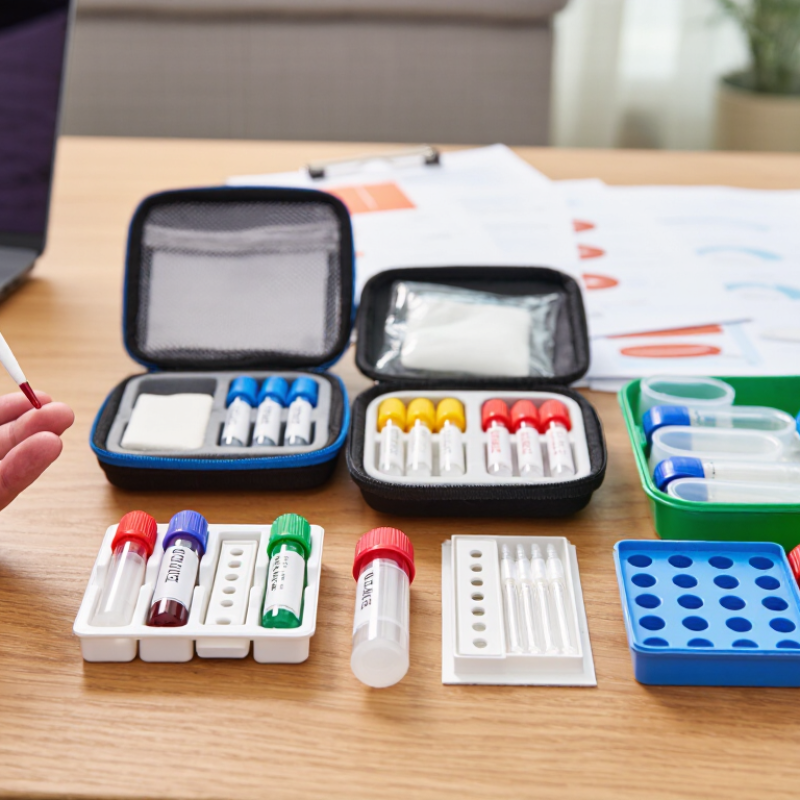
How home blood testing usually works: Order the selected panel, verify country eligibility and collection instructions, wash and warm the hands, use the supplied lancet, collect the required amount of blood, label and seal the sample, and return it using the approved shipping method. The laboratory then analyzes the sample and releases results through a secure portal or report. Home kits are screening or monitoring tools and should not replace urgent medical care or professional interpretation.
Global buyer checklist: Confirm local regulatory authorization, laboratory accreditation, sample stability during international shipping, customs requirements, result units, reference ranges, data-protection practices, customer support, recollection policy, and whether a licensed professional reviews abnormal results.

Seven Leading Blood Test Kits for International Buyers

Seven Leading Blood Test Kits for International Buyers

International buyers often compare seven practical kit types: glucose, HbA1c, cholesterol, hemoglobin, ferritin, vitamin D, and kidney function testing. Each serves a different purpose. Glucose kits support frequent monitoring, while HbA1c reflects average blood sugar over several months. Cholesterol testing can measure several lipid markers from one small sample. Hemoglobin and ferritin kits may help identify possible anemia, but results need professional interpretation. Vitamin D tests are useful in selected cases. Kidney function kits may estimate markers such as creatinine. They should not replace laboratory testing.

Reliability begins with sample quality. Check the collection method, lancet design, storage temperature, expiry date, and result-reading process. Some kits use a finger-prick sample. Others require laboratory mailing. Delays can affect certain measurements. Read the instructions carefully. Small mistakes matter. A buyer should also verify regulatory clearance in the destination country, language support, data privacy terms, and customer service hours. Requirements differ across borders. Home tests can be convenient, but they are not equally accurate. I have seen product comparisons focus on price while overlooking shipping conditions and follow-up care. That is a weak approach. A medically qualified professional should review abnormal, unclear, or unexpected results. Certain symptoms require prompt clinical attention, regardless of a home test result.

How to Compare Accuracy, Certification, and Laboratory Support

Choosing among blood test kits requires more than comparing prices or claimed accuracy. Check whether the laboratory follows ISO 15189 standards and whether the manufacturer maintains ISO 13485 quality systems. Certification must match the destination market. A certificate alone proves little if its scope excludes the tested biomarkers. Ask for the issuing body, certificate number, expiry date, and covered product range. Verify these details independently.

Accuracy depends on the complete testing process. Review sensitivity, specificity, detection limits, and reference ranges. Also examine sample requirements, storage temperatures, and transport time. A finger-prick sample may be convenient, but collection errors can affect results. Clear instructions matter. So does laboratory competence. Look for qualified staff, documented quality controls, and external proficiency testing. Results should identify the testing laboratory, method, units, and report date. Vague reports deserve caution.

Tips: Request a sample report before purchase. Confirm customer support hours and response channels. Ask how delayed or damaged samples are handled. Check whether a clinician can explain abnormal findings. Protect privacy by reviewing data storage, consent, and deletion policies. Avoid providers that promise diagnosis from one result. No kit is perfect. Even accredited laboratories can produce unclear results when symptoms and numbers disagree. A repeat test or professional assessment may be appropriate. One detail is easy to miss: international shipping can change sample quality before testing.

7 Best Blood Test Kit Evaluation Criteria for Global Buyers

A practical comparison framework for assessing home blood test kits. The percentages represent suggested buyer priorities rather than a ranking of specific companies or brands.

Accuracy should be assessed through validated laboratory methods, while certification, laboratory accreditation, sample stability, turnaround time, customer support, and international availability help determine whether a kit is suitable for cross-border use.

Choosing a Kit by Health Goals, Sample Type, and Budget

7 Best Blood Test Kits for Global Buyers?

Choosing a kit should begin with your health goal, not a colorful box. Wellness screening may require cholesterol, glucose, or vitamin markers. A fertility concern needs different tests and professional guidance. Some panels look comprehensive but provide little useful context. In practice, a smaller panel can be easier to understand.

Sample type also affects convenience and reliability. Finger-prick kits need only a lancet and a few blood drops. Venous collection usually requires a trained professional, but it may support broader testing. Check the collection instructions carefully. Poor timing, heat exposure, or an underfilled tube can affect results. Home sampling is convenient, not foolproof.

Budget involves more than the purchase price. Include collection fees, shipping, repeat testing, and consultation costs. Choose laboratories that disclose quality controls, testing methods, and report limitations. Results should be reviewed by a qualified clinician, especially when symptoms or medicines are involved. Privacy policies matter for international buyers, since health-data rules differ by country. Check import, return, and sample-shipping requirements before ordering. Not every result is decisive. A single number can mislead when sleep, fasting, exercise, or illness changes it. I would compare transparent evidence over impressive claims, while accepting that no kit answers every health question.

Ordering, Shipping, Results, and Privacy Across Borders

Choosing the seven best blood test kits for global buyers requires more than comparing prices.

Look for clearly listed analytes, sample requirements, laboratory accreditation, and clinician review. General wellness, metabolic, vitamin, hormone, allergy, and inflammation panels serve different needs. A broad panel is not automatically better.

Ordering across borders can create practical delays.

Confirm whether the provider ships to your country and whether customs accepts biological samples. Check the packaging, return label, collection window, and temperature instructions. A small insulated envelope may determine whether your sample remains usable. Some kits require a finger-prick sample, while others need venous collection at a licensed facility. Read the rejection policy before paying.

Results should show units, reference ranges, collection dates, and clear explanations.

Results can vary between laboratories. Discuss abnormal findings with a qualified healthcare professional, especially before changing treatment. Privacy deserves equal attention. Review data retention, international transfers, deletion requests, and whether research use requires separate consent. Avoid providers promising instant answers or complete certainty. That promise is a warning sign. I would also save only essential account details and use a private email address. My earlier assumption that cheaper shipping meant better value was wrong; a delayed sample can cost more than reliable service. Cross-border testing remains useful, but the details need careful checking.